In development · A new theatrical work
Dundee Baby presents
Take It Home
A short theatrical work in nine movements about a name carried across the Atlantic, the people whose labour gave it value and the responsibility of bringing it home.
The work
A plate remembers what history forgets.
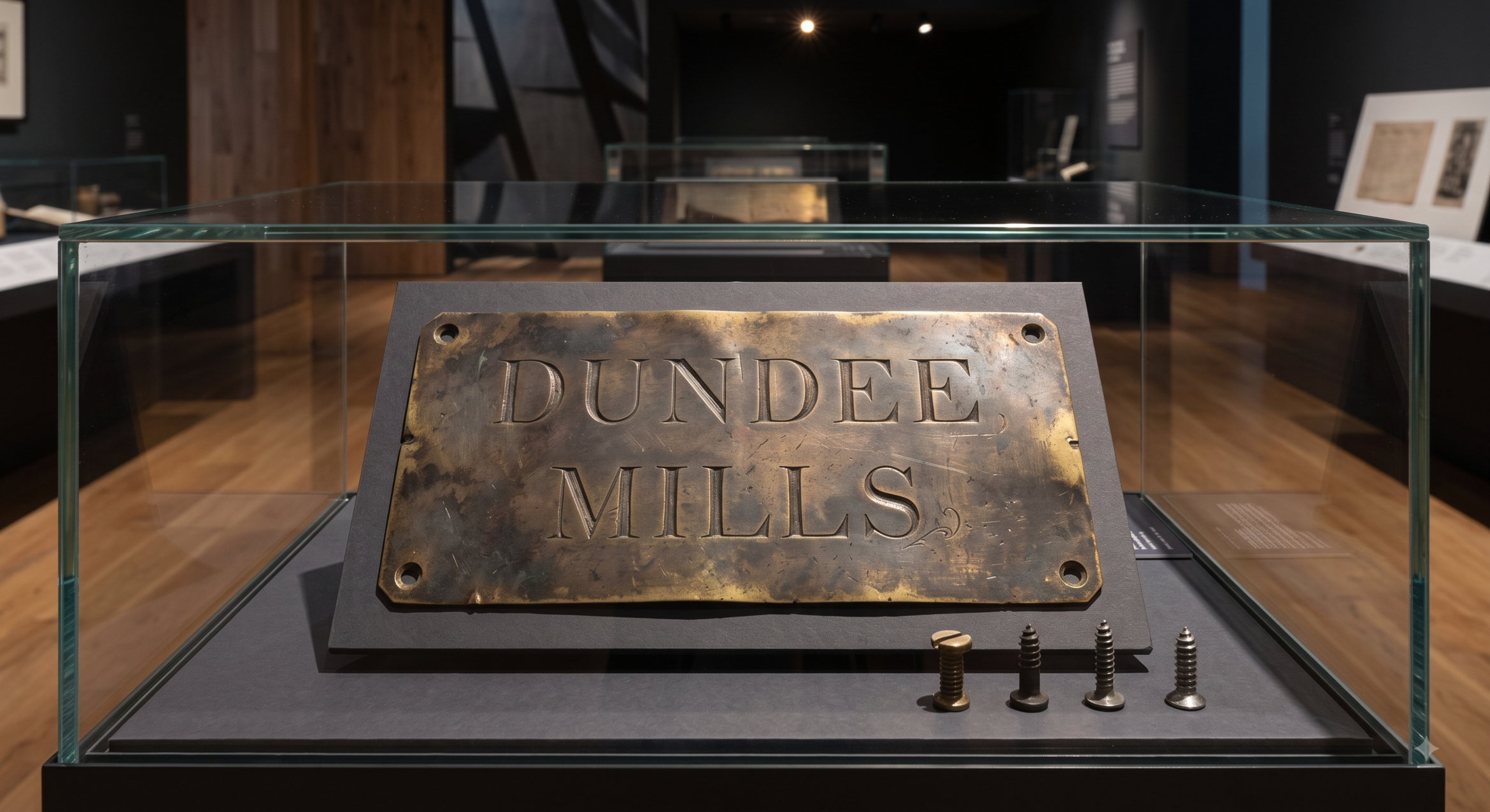
A brass plate engraved DUNDEE MILLS begins on a loom in Dundee, Scotland. As machinery is repaired and replaced, the plate is transferred from loom to loom. Its four screw holes remain while everything around it changes.
A Dundee family carries the loom to Griffin, Georgia, where an American proprietor claims its engraved name for a growing textile company. Across generations, the business prospers while the family that brought the name remains among its workers.
The plate becomes the play’s witness. It holds the sounds of machines, hands, voices and rooms—memories eventually heard by San Tropat, the original Dundee Baby, as he tries to understand his father’s final instruction: “Take it home.”
The central question
Who owns a name?
The play moves through three forms of inheritance: property, memory and responsibility.
It explores industrial labour, migration, appropriation and belonging without treating history as something safely finished. The same name can be a place, a commercial asset, a family burden and an invitation to begin again.
When the plate returns to contemporary Dundee, it does not complete a circle. It opens a question for the living city: what should Dundee carry forward, and who should decide?
Work in progress
The story returns to source.
Take It Home is being developed alongside Dundee Baby’s public succession inquiry. Its final form will grow through research, conversation and creative collaboration with Dundee.
Updated August 2026